

Wind as primary propulsion.
The engineering to prove it.

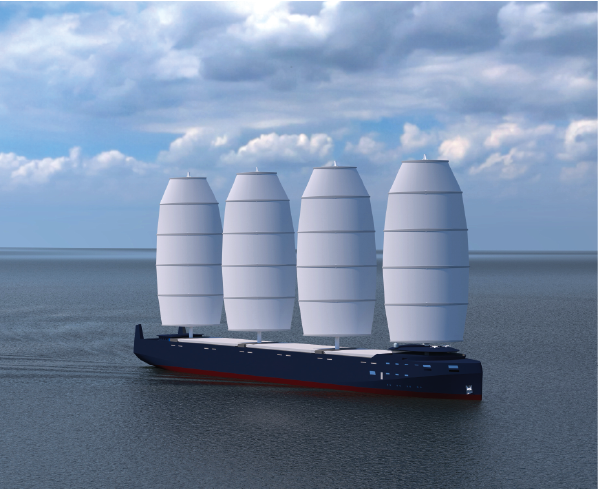
Three free-standing rotating masts, 3,500 m² of sail area, and a high-altitude traction kite: a sea-proven primary propulsion, complemented by by a fast-maturing technology.

Key vessel data.

3,500
m² of sail
114.6
metres long
17.9
metres wide
204
TEU capacity
3
rotating masts
100
m² of kite
7.5
knots average speed
~ 2g
CO₂ / tonne·km
Océan vu du ciel

Discover the DynaRig Technology

3D animation of the DynaRig system, courtesy of Southern Spars

Interactive exploded view.

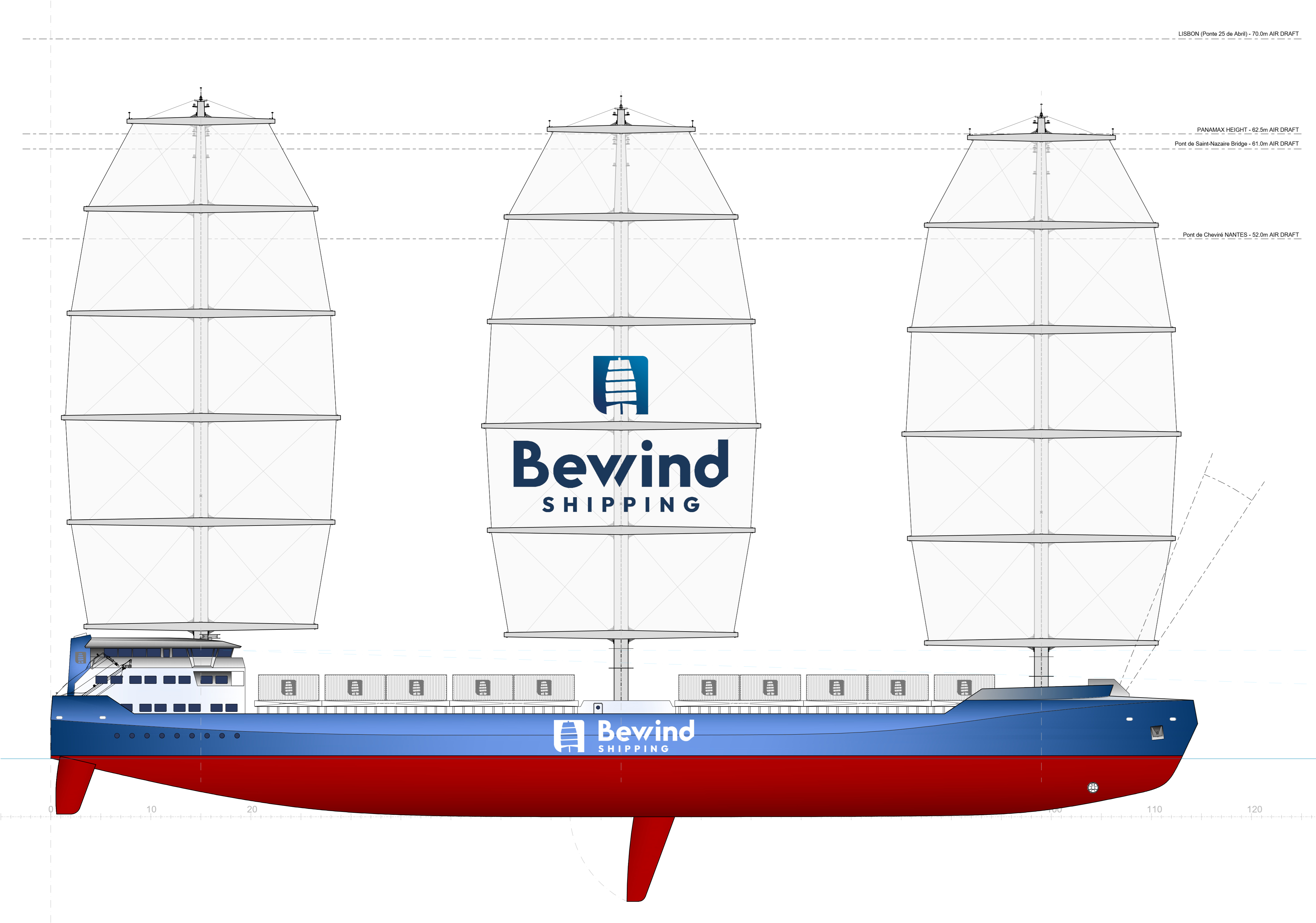
Hover over the vessel to explore each system. Drawings supplied by Dykstra Naval Architects.

Porte-conteneurs à propulsion vélique BEWIND
  • 1Rotating mast
  • 2High-altitude kite
  • 33,500 m² sail area
  • 4Container holds
  • 5Hydro-generators

Native dual propulsion.

DynaRig + Kite synergy: optimal navigation across all wind conditions.

Primary propulsion

DynaRig

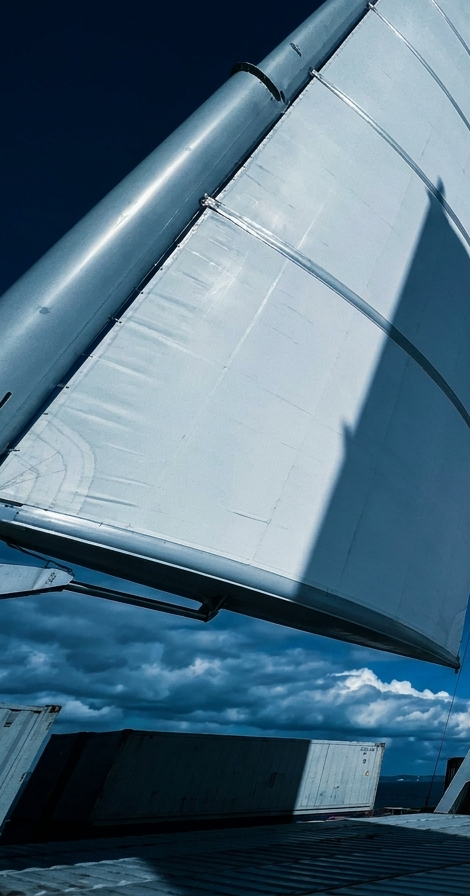
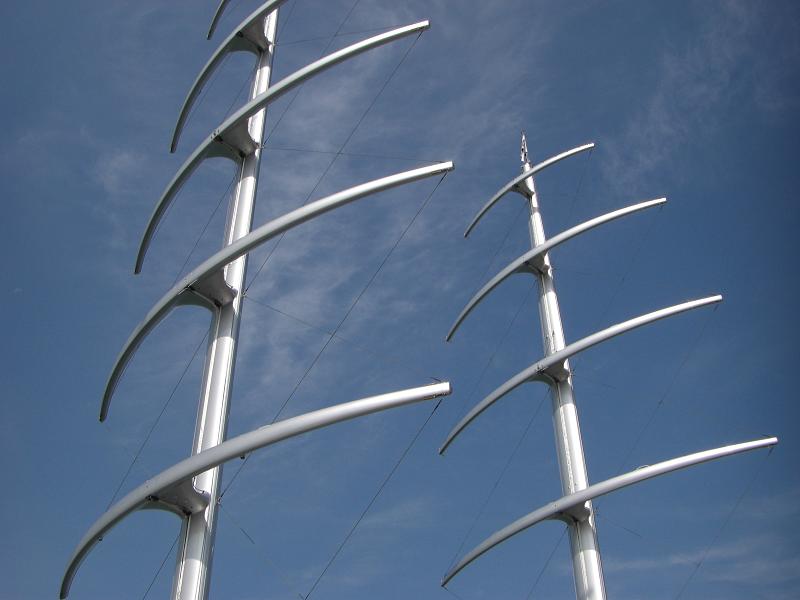
Three free-standing rotating carbon masts (manufactured by Southern Spars). Fully automated sails with no running rigging. Sea-proven technology in commercial operation across multiple vessels (over 450,000 nautical miles).

3500 m² sail area Free-Standing Carbon Masts 100% Automated Furling
Auxiliary propulsion

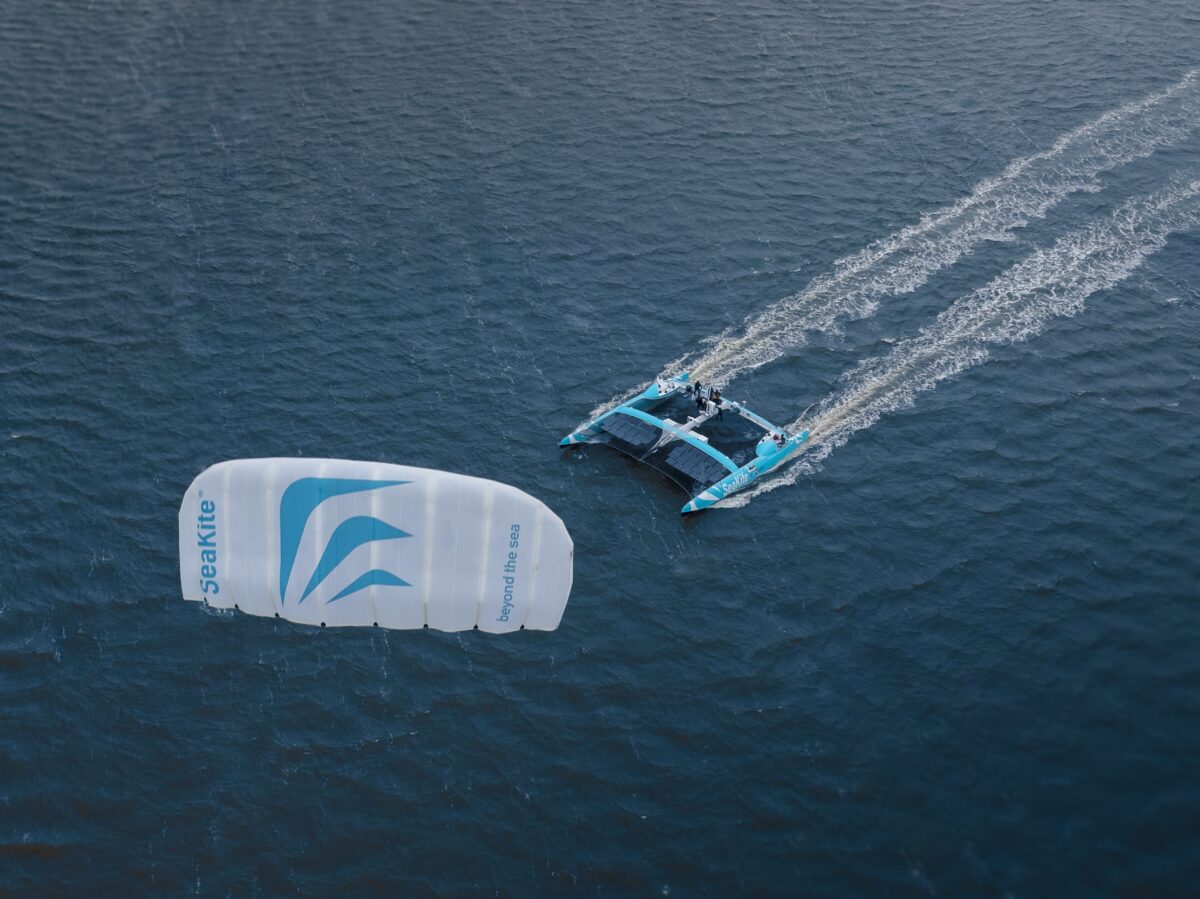
High-altitude traction kite

100 m² dynamic kite developed by Beyond the Sea. Harnesses steady high-altitude winds to maximize forward thrust. Automated launch, flight, and recovery.

100 m² Dynamic Wing High-Altitude Winds (100m) Automated Flight Control
Redundancy & safety in light winds

Both wind systems operate independently. In light or unfavorable wind conditions, auxiliary propulsion (low-carbon engines and battery banks) takes over. No single point of failure — service continuity is engineered from the ground up.

Smart routing and energy efficiency.

OPTIMIZED WEATHER ROUTING

The vessel will feature a weather routing system based on advanced wind and swell forecasts, designed to maximize wind propulsion and secure transit times.

Hydrogenerators

When sailing above target speed thresholds, reversible propellers will generate on-board power — aiming to maximize decarbonization of internal energy consumption.

TARGET ZERO EMISSION AT BERTH

Zero local footprint during port calls: no auxiliary diesel engines running, powered instead by on-board batteries. Fully compatible with port-side cold ironing where available.

Industrial partners & engineering.

Our ship is the result of an alliance of world-renowned specialists.

Dykstra Naval Architects Holistic design of the vessel
Southern Spars Manufacture of carbon rotating masts and rig system
Beyond-the-Sea Integration of the SeaKite auxiliary wind system
Alwena Shipping Project management, technical supervision and regulatory compliance